As Atlanta and Golden State prepare for the WNBA Finals, this postseason has offered a reminder that some of basketball’s most revealing moments happen when the clock is stopped.
There was a moment during Golden State’s playoff run when five players came together on the court and took a breath.
Not the kind of breath you take after running the length of the floor. A deliberate one. In a clip circulating online, Veronica Burton appeared to guide her teammates through a collective inhale and exhale. They gathered, breathed together, exchanged a few words, and returned to the game.
It was a small moment that easy to miss amid everything else happening in a playoff game, but the camera caught it.
In a sport where nearly every movement is designed to create an advantage, five players had briefly stopped trying to do anything except collect themselves.
The moment doesn’t tell us why Golden State is headed to the WNBA Finals. It would be a stretch to suggest that a breathing exercise explains a playoff victory, but it does offer a glimpse of something we rarely see clearly: the work players do to prepare themselves and one another for whatever happens next.
And after a postseason that has sent some of the league’s most accomplished teams home earlier than expected, perhaps those are the kinds of details worth paying more attention to.
Because the question heading into the Finals isn’t simply how Atlanta and Golden State got here.
It’s what they were able to do that everyone else couldn’t.

The playoffs have a way of changing what we thought we knew.
Minnesota entered the postseason with the league’s best record.
Las Vegas was defending a championship.
New York had championship experience and a roster that looked more than capable of making another run.
Indy had the most high-powered offense the league has ever seen.
None of them reached the Finals.
The eighth-seeded Liberty swept the top-seeded Lynx in two games, winning both by 16 points. New York then ran into Atlanta and lost three straight.
Las Vegas survived a three-game opening-round series against Indiana, only to be swept by Golden State.
And suddenly, the championship matchup looks rather different from what recent history might have led us to expect.
Golden State, a franchise playing just its second season, will compete for its first championship. Atlanta returns to the Finals for the first time since 2013, still searching for its first title. There are plenty of compelling stories in that matchup, but the eliminated teams might tell us just as much about how we got here.
Consider New York.
The Liberty looked convincing against Minnesota. They won Game 1 by 16, then repeated the margin in Game 2. Whatever the Lynx had accomplished over the regular season, New York found a way to beat them twice without allowing either game to become particularly close.
Five days after eliminating the No. 1 seed, the Liberty opened their semifinal series against Atlanta with a ten-point loss, then came a three-point overtime loss, then a two-point loss.
The margins became smaller. The results didn’t change.
It’s tempting to interpret that progression as New York coming increasingly close to solving Atlanta. Perhaps it was. But the final scores also reveal something else: Atlanta was able to win three games that presented three different levels of difficulty.
And that raises a question worth exploring.
What happens when the things that have made a team successful stop producing the same results?
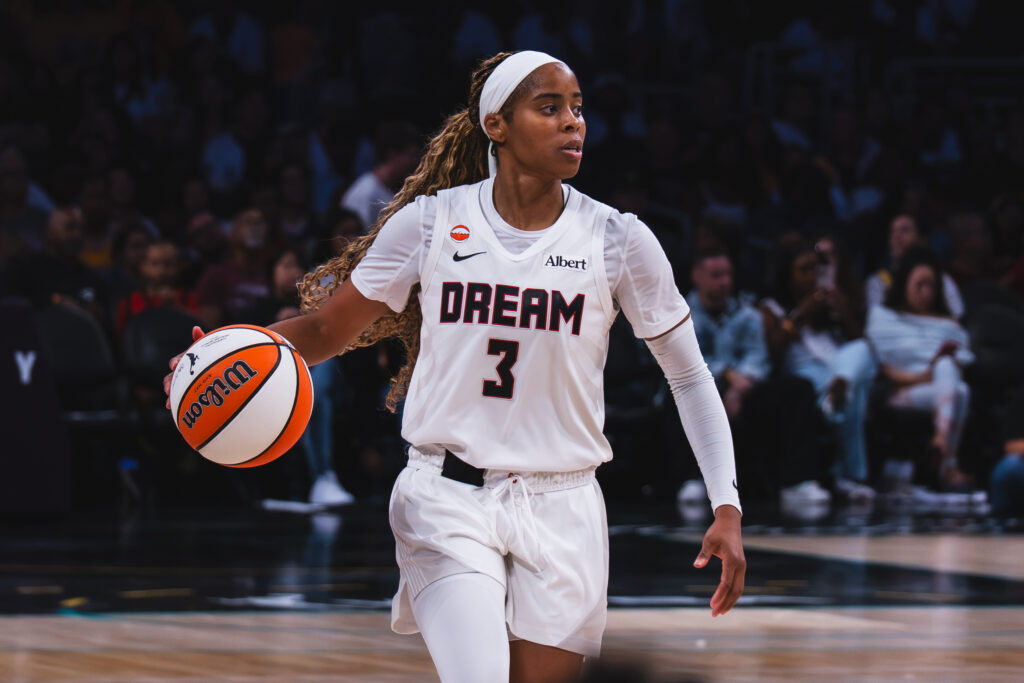
The difference between having an answer and finding one
The playoffs are often described as a test of experience. There’s good reason for that. Familiarity with postseason pressure, opponents, adjustments, and the demands of a series can be valuable. However, experience doesn’t guarantee that a team will have the right response to a particular problem.
And this year’s results have provided some interesting examples.
Golden State entered its semifinal series against Las Vegas having lost all its regular-season meetings with the Aces. The Valkyries then won three consecutive playoff games. The first was a relatively comfortable 71–60 victory. The second finished 83–81. The third required overtime before Golden State pulled away, 87–77.
Three victories, three different kinds of games.
The first demonstrated that Golden State could disrupt a team that had repeatedly beaten it. The next two demonstrated that the Valkyries could finish games when the outcome remained uncertain much later.
That’s an important distinction.
It’s one thing to execute a game plan when everything is working. It’s another to maintain enough of that execution when an opponent begins finding solutions of its own.
Golden State had already experienced how quickly that could change.
Sometimes a team has to learn very quickly, and sometimes the more revealing question isn’t whether a team has encountered a difficult situation before, it’s whether the players know what to do when they encounter one now.
Five players, one breath
This is where that brief Golden State huddle becomes interesting again.
In isolation, a player taking a moment to regulate her breathing isn’t particularly unusual. Athletes use routines to manage their attention and physical responses all the time.
But a collective reset introduces another element. One player’s approach to a difficult moment becomes something the rest of the team participates in. There is communication involved, even if very little is said.
There is also a degree of trust.
For those few seconds, everyone has to agree that the best thing they can do before the next possession is the same thing. It’s worth asking whether that moment reflects an established practice within Golden State, or whether it was simply a spontaneous response to the circumstances.
Either answer would be interesting.
The important thing isn’t to turn the gesture into a grand explanation for winning. It’s to recognize that players are constantly influencing one another in ways that aren’t reflected in their individual statistics.
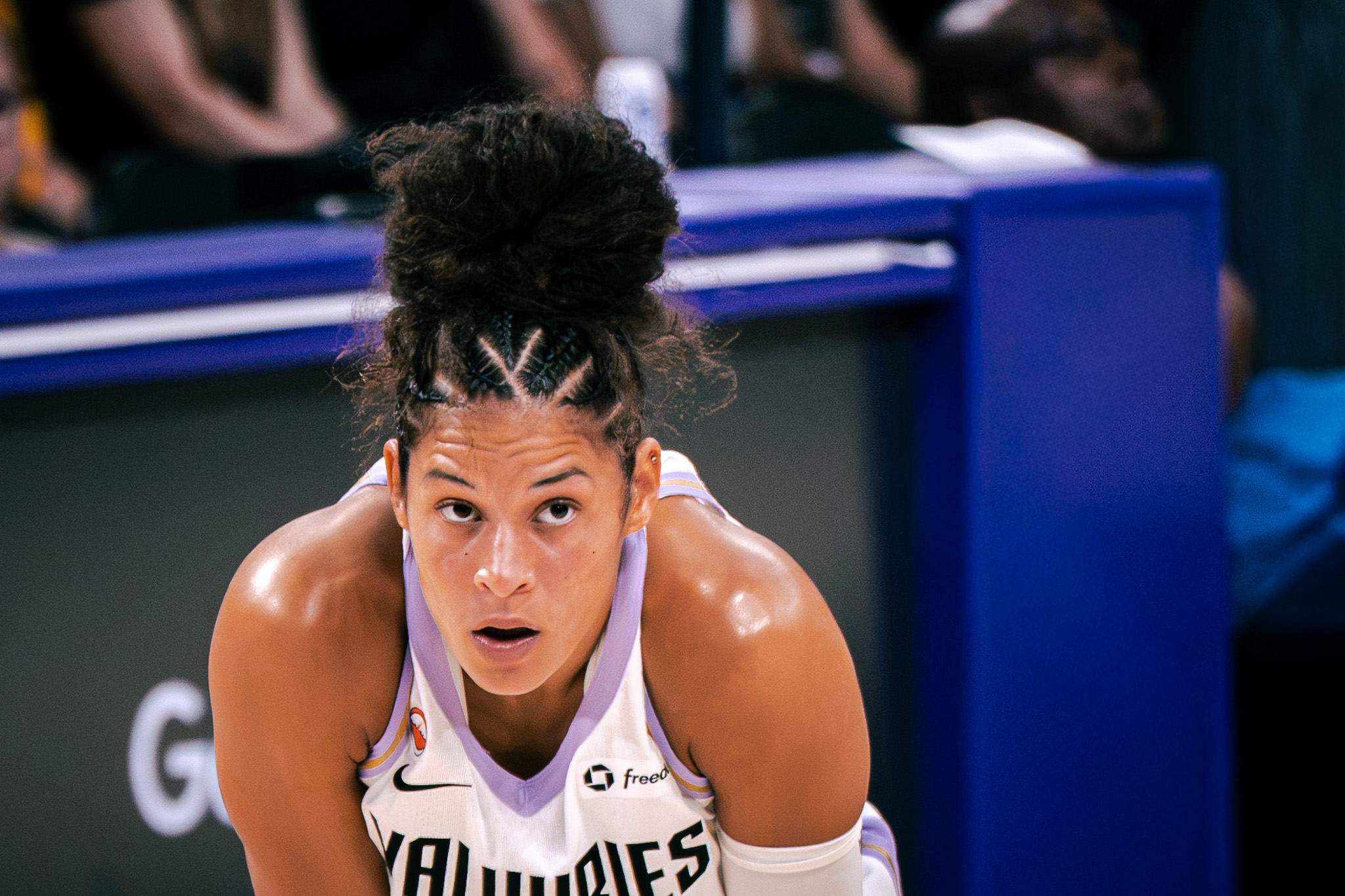
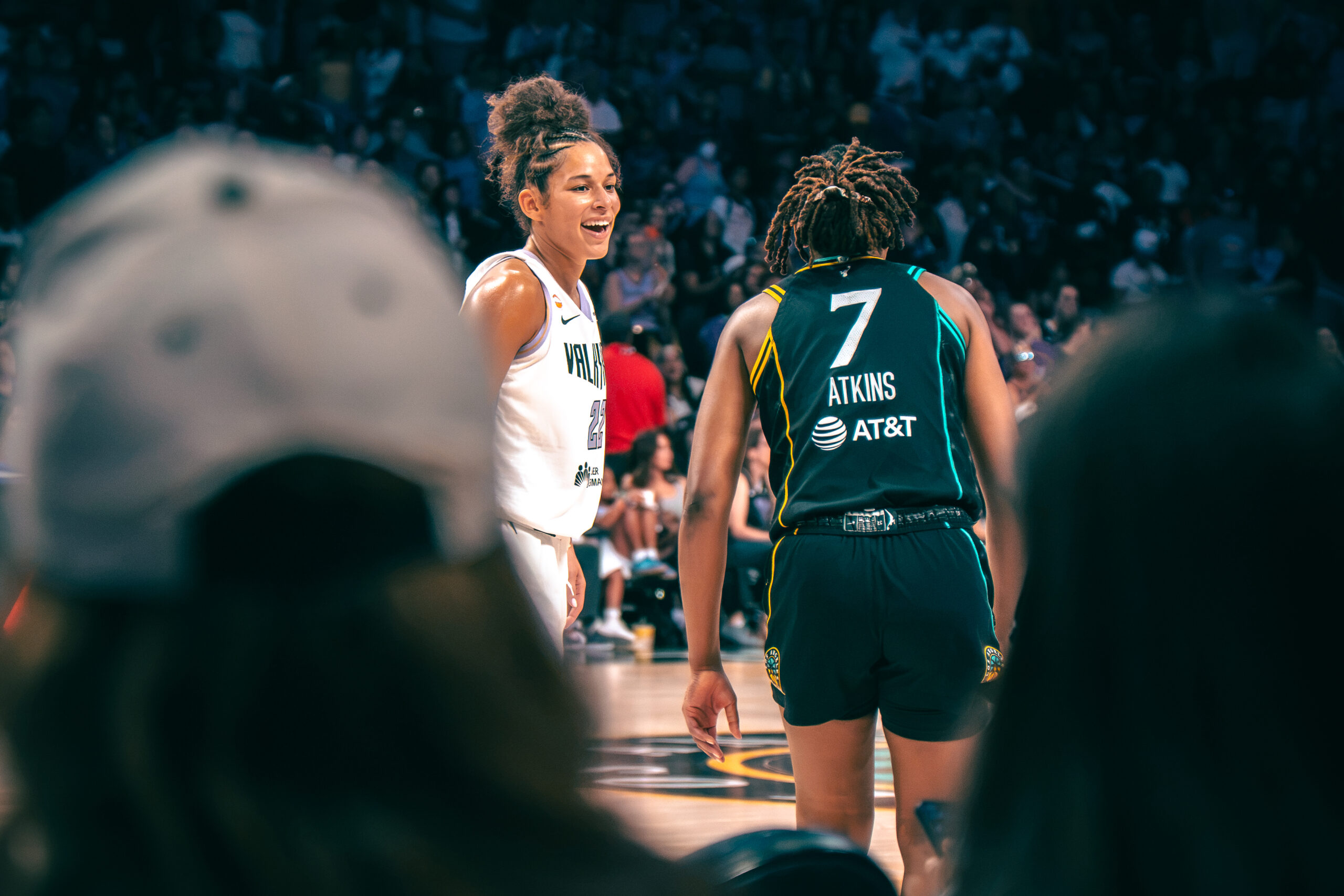
I was reminded of another moment involving Burton while photographing a close game between Golden State and Los Angeles earlier this season.
In the dead ball just before one of the final defensive possessions, Burton was laughing with the player she was guarding.
The game was still very much in question.
From behind the camera, the expression stood out precisely because of the circumstances. The possession was important, the competition was serious, and Burton appeared remarkably at ease. Of course, a photograph can’t tell us what someone is feeling. A smile might reflect confidence, amusement, communication, or something else entirely.
But it can make us curious.
And seeing the later huddle brought that photograph back to mind.
Was there something about the way Burton approached tense situations that helped her teammates? Was the breathing exercise familiar to them? How much of a team’s composure is individual, and how much is created collectively?
Those questions deserve more than a conclusion drawn from two brief observations.
But they’re worth asking.
Because much of what happens between teammates during a game is designed to influence what happens next.
We simply don’t always recognize it as part of the basketball.
Atlanta has been winning different kinds of games, too.
The Dream’s path to the Finals has been less dramatic in one sense.
They haven’t lost a playoff game.
Atlanta swept Washington in the opening round, winning by 15 and 18 points, then swept New York in the semifinals, but the six-game winning streak doesn’t mean the Dream haven’t been tested. After beating the Liberty by ten in Game 1, Atlanta needed overtime to win Game 2, 101–98. Two days later, the Dream completed the sweep with an 85–83 victory in Brooklyn.
In the space of three games, Atlanta went from winning comfortably to needing nearly every available possession. There is a difference between a team that can overwhelm an opponent and one that can continue executing when the opponent refuses to go away. Atlanta has shown evidence of both.
The Dream’s roster was constructed with the ambition of competing deep into the postseason. Bringing together established players, including DeWanna Bonner, was part of that effort.
But roster construction is only the beginning of the story.
The more interesting question is what happens after those players have spent months learning how to play alongside one another.
A successful defensive possession might depend on one player anticipating a teammate’s rotation. A well-timed pass might come from recognizing where someone prefers to receive the ball. A conversation during a dead ball might prevent the same mistake from happening twice.
These are ordinary parts of basketball.
They’re also the kinds of things that become especially consequential when a game is decided by two or three points.
And they’re difficult to appreciate if we’re only looking at the player who scored the basket or recorded the steal.
Atlanta’s close victories against New York don’t prove that the Dream possess better chemistry or communication than their opponents.
What they do establish is that Atlanta repeatedly found enough answers to win.
Understanding exactly where those answers came from is more revealing than simply saying the Dream wanted it more.
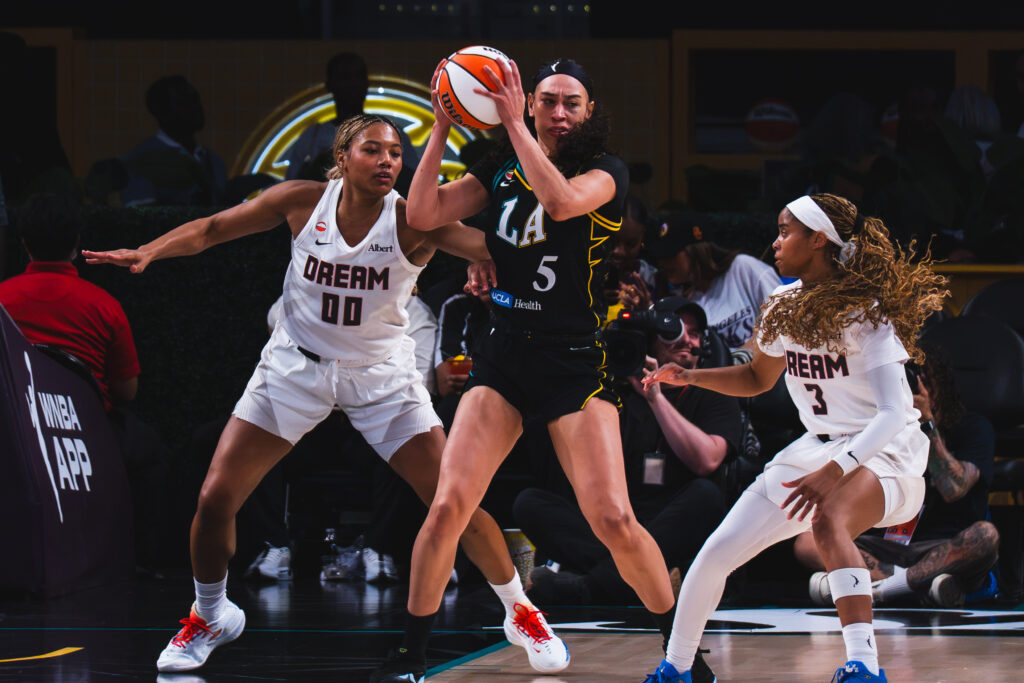
What losing teams couldn’t solve
It’s easy to turn every playoff result into a judgment about the team that lost. A favorite is eliminated, and suddenly its regular-season success seems less convincing. A star struggles, and the conversation becomes whether that player can perform under pressure. A team loses several close games, and questions emerge about its toughness or ability to finish.
Sometimes those criticisms identify real problems. Other times, they simplify what actually happened.
New York’s postseason is a particularly useful example. The Liberty were good enough to eliminate the league’s top seed in two convincing games. They were also unable to win a game against Atlanta.
Both things are true.
The difference doesn’t necessarily reveal some fundamental flaw in New York’s identity. Basketball is a series of matchups, and the problems one opponent creates can be entirely different from those created by another. A defensive strategy that disrupts Minnesota might not be equally effective against Atlanta. An offensive approach that produces good opportunities in one series might encounter different coverage in the next. And adjustments that seem obvious from the outside may be considerably harder to execute against a team that is adjusting, too.
The same principle applies to Las Vegas.
The Aces’ championship experience didn’t disappear when they faced Golden State. Neither did the talent that had made them successful. But whatever advantages they had previously established against the Valkyries weren’t enough to win a postseason game. The useful question is not whether Las Vegas suddenly forgot how to win, it’s what Golden State changed, what Las Vegas tried in response, and why those responses weren’t sufficient.
That kind of examination requires more than a final score.
It requires watching possessions, comparing decisions, listening to what players and coaches say afterward, and noticing what changes from one game to the next.
And sometimes it requires paying attention to things happening nowhere near the ball.
The people who never touch the ball
One of the limitations of how we consume sports is that the broadcast naturally follows the action. The camera tracks the ball. Replays focus on scoring plays, turnovers, fouls, and spectacular individual performances. Those are important moments.
But they represent only part of what is happening.
During a single possession, four offensive players might never touch the ball. Their movements can still determine whether the player who does gets an open shot. On defense, a player might never record a block or steal, yet prevent an opportunity simply by being in the correct position.
And between possessions, there are conversations, corrections, encouragement, disagreements, and moments of recognition that can shape what happens afterward.
Some of those interactions are visible.
Others happen on the bench, during timeouts, in practices, or away from cameras entirely. The challenge is that we can’t automatically assign significance to everything we notice.
A player smiling doesn’t prove confidence.
A team huddling doesn’t prove unity.
A bench celebrating doesn’t establish that everyone feels equally involved.
But those moments can give us a place to start looking. They can prompt questions that the statistics alone might not suggest. What was said? What changed afterward? Was this a one-time interaction or something the team does regularly? Did the players involved recognize it as important?
The answers might confirm an observation, complicate it, or reveal that the moment meant something entirely different.
That’s part of the value of looking closer.
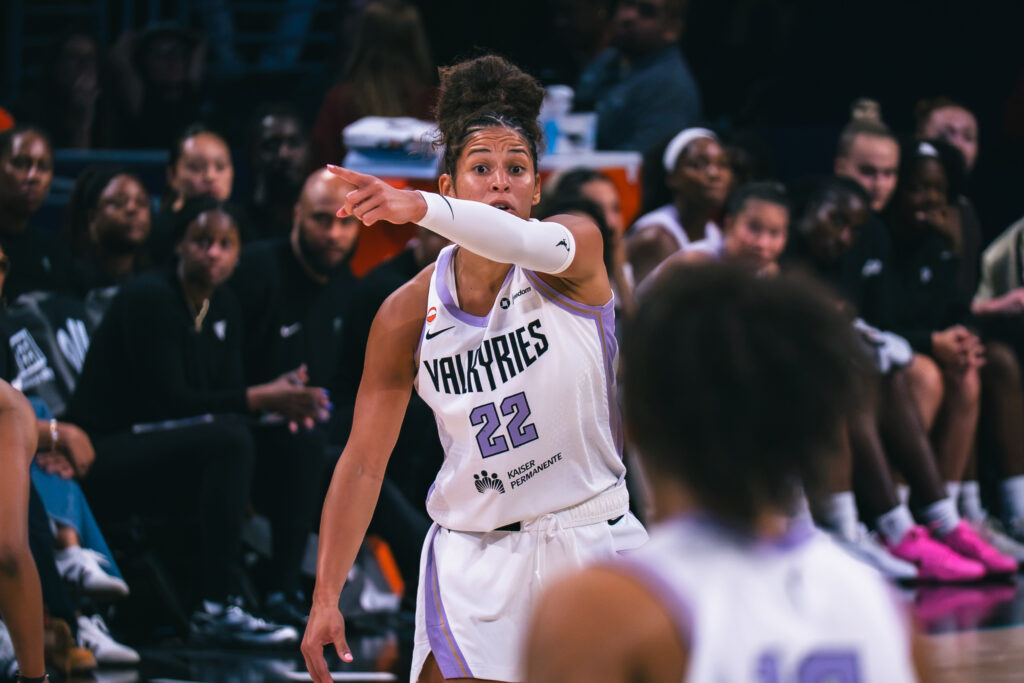
What will decide the Finals?
Golden State and Atlanta enter the championship series having arrived at the same destination through different circumstances. One is a second-year franchise that has already exceeded almost every conventional expectation for an expansion team, the other is an established organization returning to the Finals after more than a decade, having assembled a roster capable of competing for the championship it has never won.
Both swept their semifinal opponents.
Both have survived close games.
Both have demonstrated that they can win without everything unfolding exactly as planned.
But the Finals will introduce new problems. Atlanta will encounter a Golden State team that has already found ways to beat the defending champions. Golden State will face an Atlanta team that hasn’t lost since the postseason began.
Whatever has worked for either team to this point will be tested again, against an opponent that has spent the same postseason finding answers of its own. And when something stops working, we’ll learn a little more about what each team has built. That might be revealed through a defensive adjustment, a change in rotation, or a player stepping into an unfamiliar responsibility.
It might come through something as small as a conversation after a mistake.
Or five players taking a breath together.
We shouldn’t mistake those moments for the whole explanation.
But we shouldn’t dismiss them simply because they don’t appear in the box score, either.
There is an enormous amount of work involved in winning a basketball game, and only some of it happens while the clock is running.
The rest is often hidden in plain sight.
And as Atlanta and Golden State prepare to compete for a championship, it might be worth watching what happens between the plays.