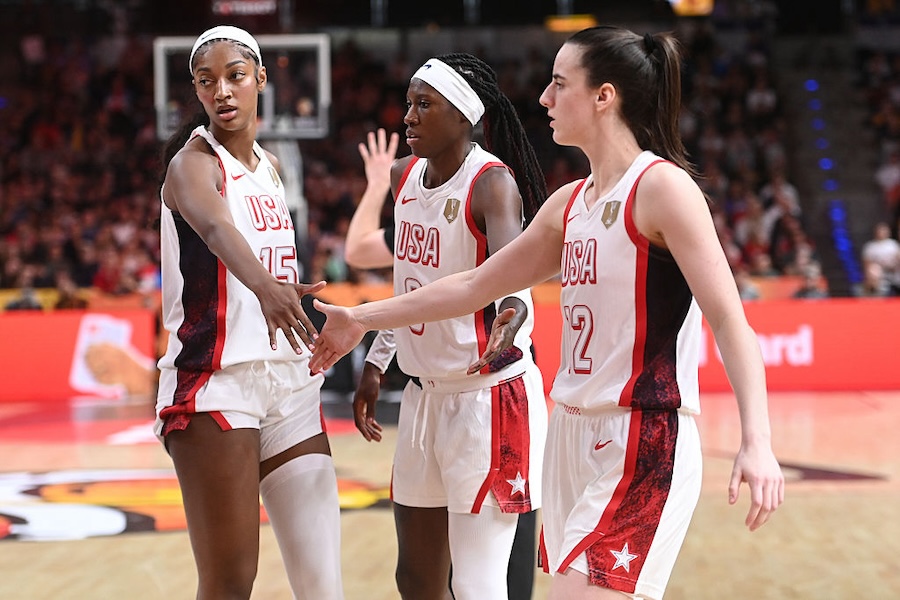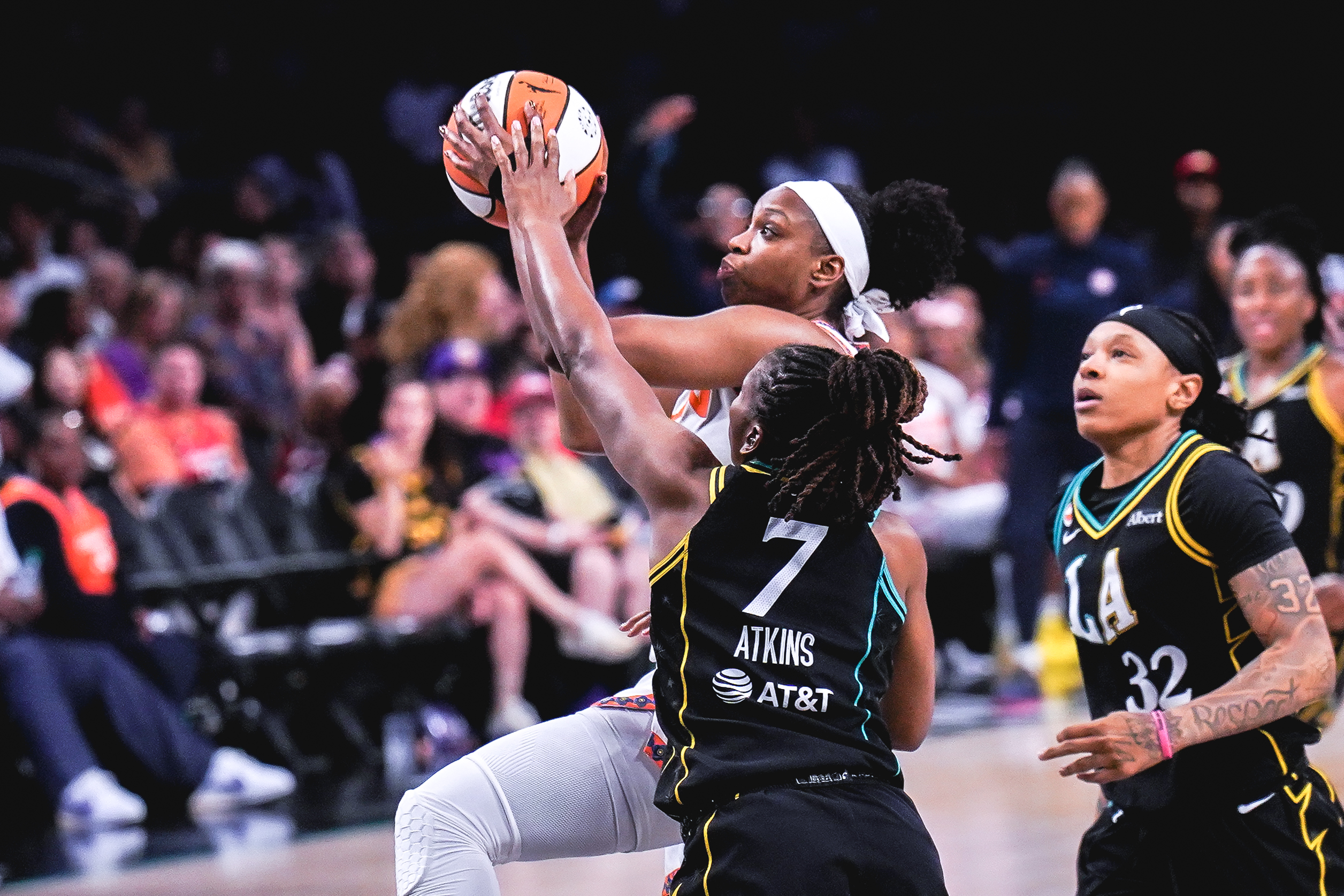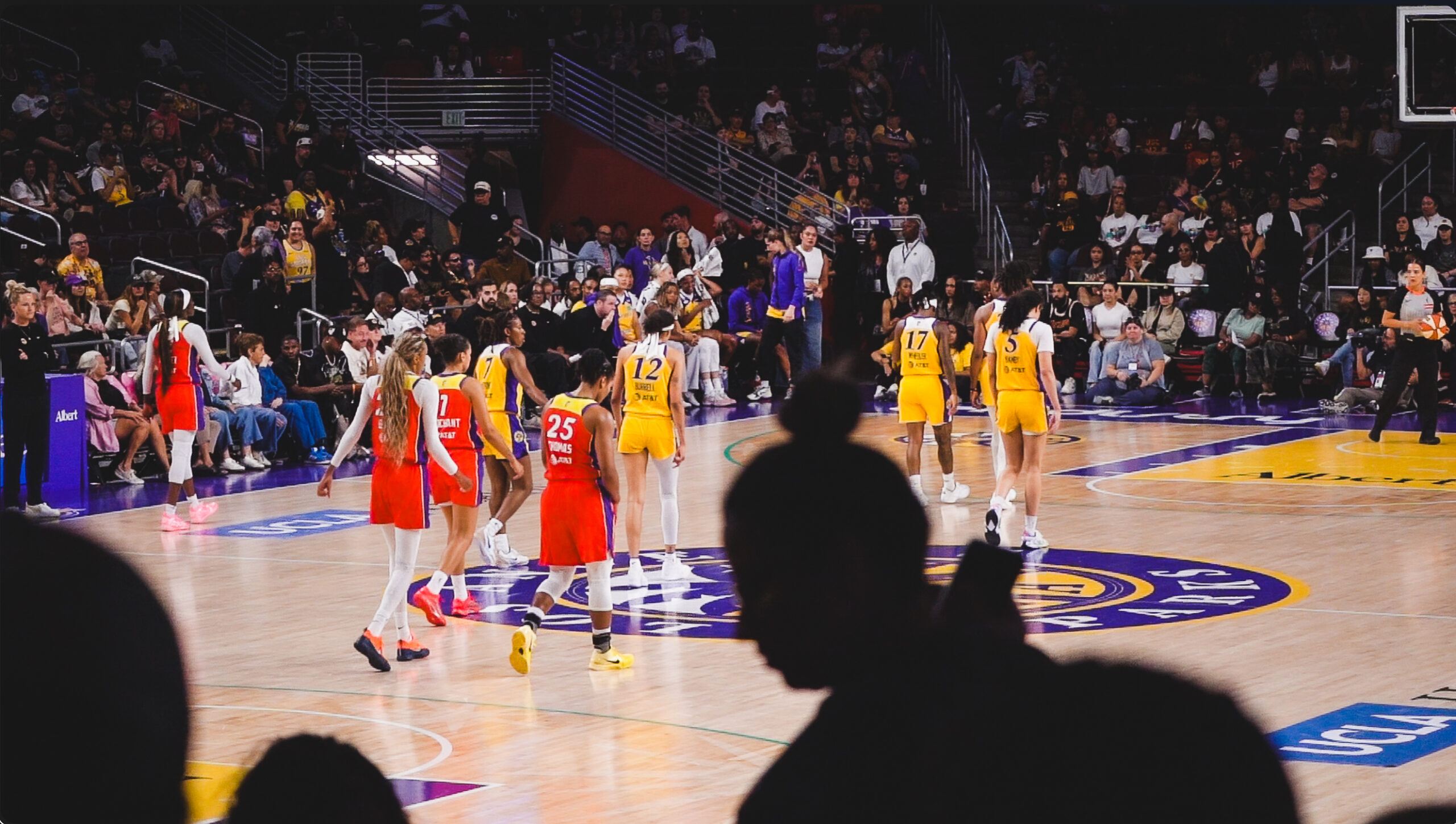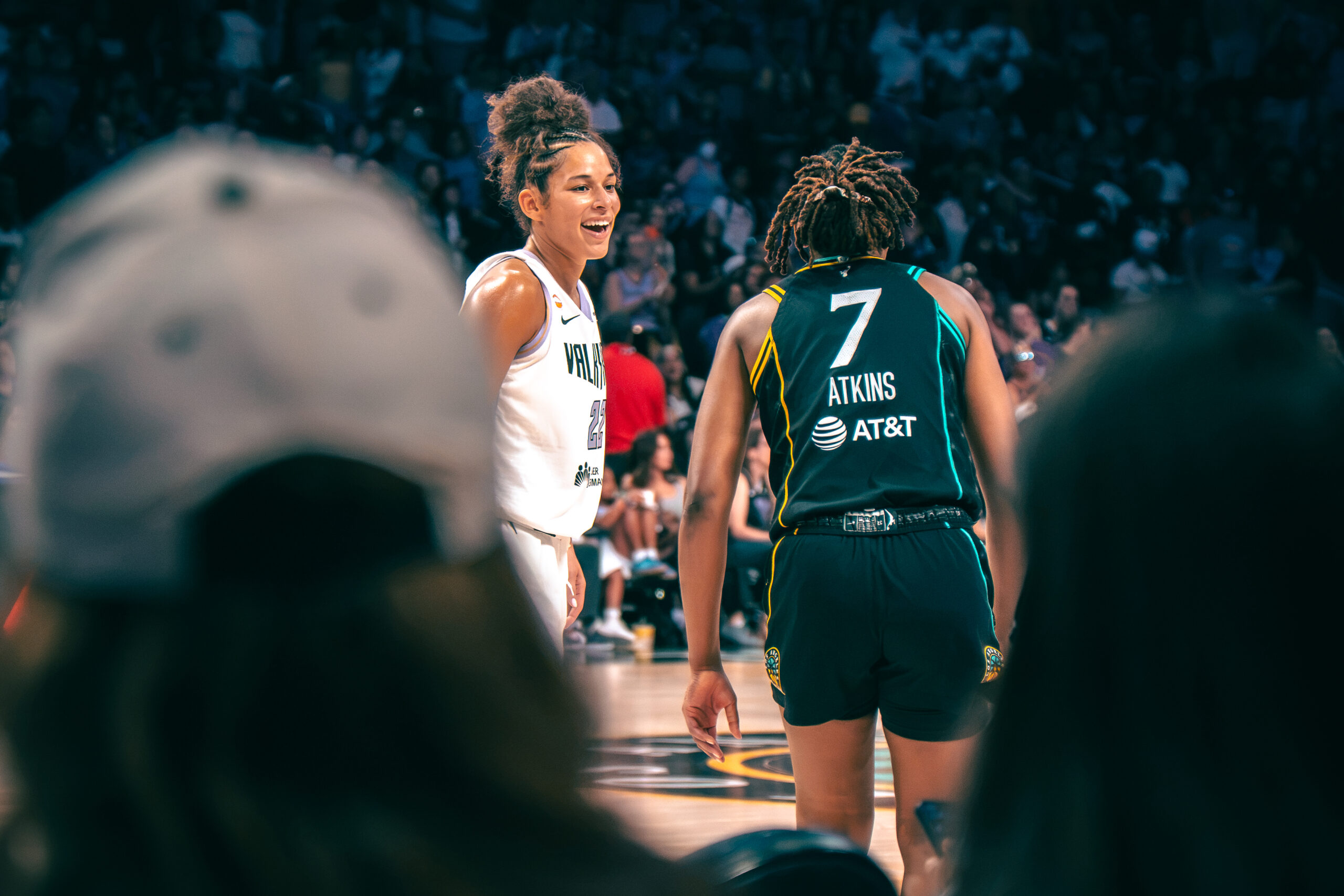
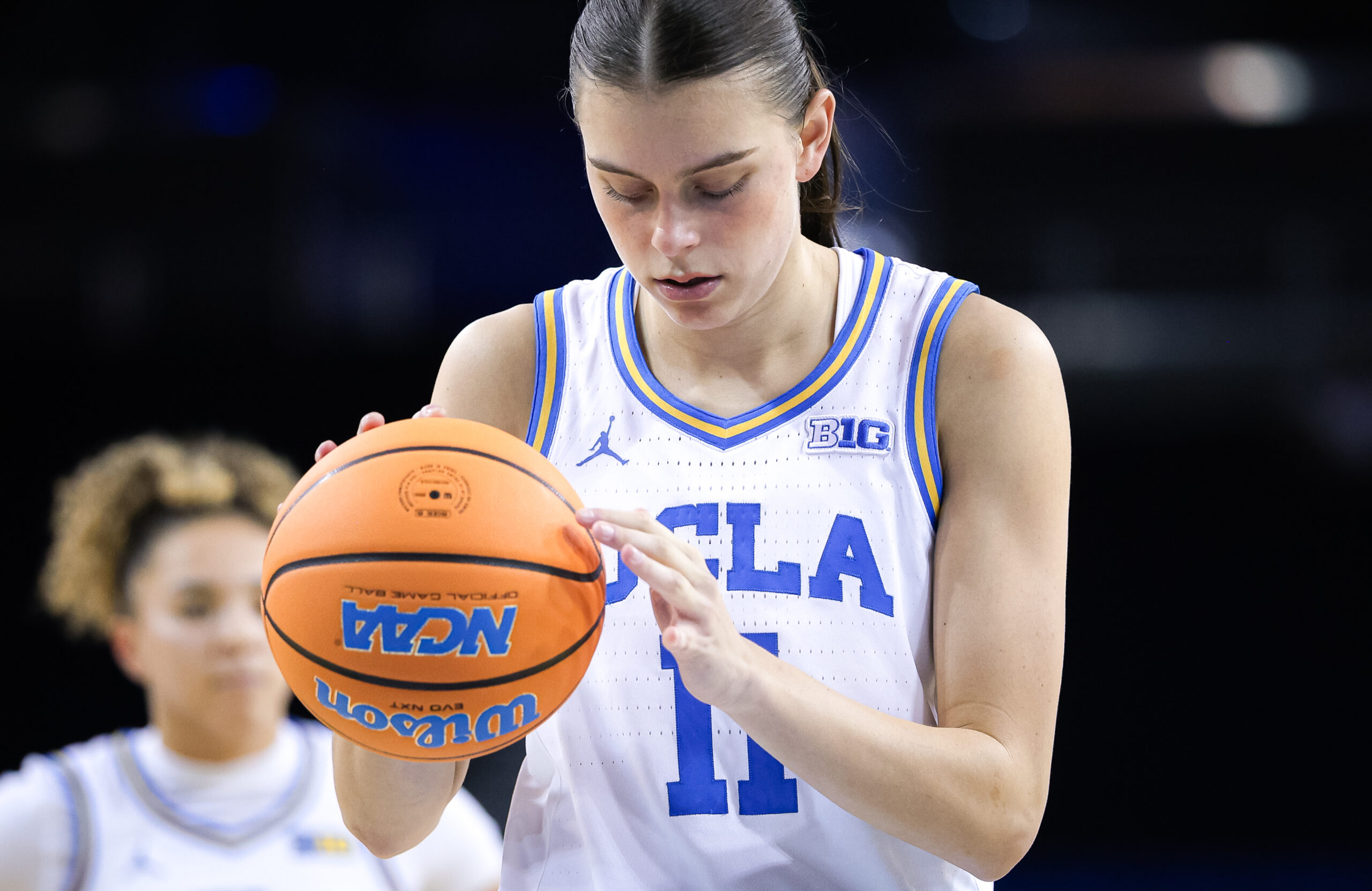
Gabriella Jaquez while she was at UCLA, preparing to shoot a foul shot. (Laura Casadonte/Frame of Play)
Is there actually a common thread in the shot routine among the best free throw shooters?
We’ve all seen them, the free throw routines that feel lengthy and complicated, and the ones that look surprisingly simple. Then comes the question: does it make any difference on way or the other? Let’s find out!
Normally, basketball rarely slows down long enough for the average person to pick out minute details.
A great screen lasts a split second. A backdoor cut is gone almost as soon as it appears. Even incredible defensive rotations can disappear before the replay arrives.
Then someone gets fouled. Free throws aren’t dead time, they’re one of the few moments in basketball where the game stops long enough for a player to tell you about themselves.
The television broadcast actually gives you everything you need.
Every free throw starts cuts a camera under the basket, typically operated by someone on a rolling desk chair. Before the director cuts to the familiar wide angle, you get a close look at the shooter’s face, hands and eyes. It’s only there for a second or two. Most viewers are waiting for them to get on with it and cut to the wide camera that shows the shot.
They’re watching the wrong one.
That close-up is where the interesting part happens.
Start with the walk.
Before the referee even hands over the ball, the routine has already begun.
Watch how the player approaches the line. The pace is familiar. The posture doesn’t change. Even the number of steps often stays the same. It looks like they’re simply walking to the stripe.
They’re not.
They’re easing into a sequence they’ve repeated thousands of times. Long before they think about making the shot, they’re trying to make the moment feel familiar.
Then comes the personality.
Every player has their own routine.
Three dribbles.
One dribble.
No dribbles.
A deep breath.
A spin of the ball.
A quick wipe of the hands.
But there’s something else…
There’s one more thing that happens that we usually don’t get to see on the outside.
Visualization.
If you’ve been around sports, played sports, or even just read a few self help books, you’ve probably heard about the power visualization can have on an outcome. Sports psychology has shown that vividly visualizing a successful movement activates many of the same neural pathways as physically performing it. In one well-known study, participants who only imagined making free throws improved almost as much as the group that actually practiced them.
Watch Sophie Cunningham before a foul shot. Before she gets the ball, she’ll often make a couple of tiny practice motions while staring at the rim, like she’s watching the shot fall before she’s taken it.
It looks like just another ritual, but it has a much greater effect.
Her mind is already taking the shot before her body does. It’s hard to know exactly how many players visualize their shot when they step up to the line since everyone who visualizes their foul shots show it outwardly like Sophie does. However, the science would tell you that anyone who does incorporate this element in their routine, improves their chances of sinking the shot.
This is also where most fans get the routine wrong.
We tend to think believe only in what we see, and what we see is all the dribbles and such. Do more dribbles must mean more focus? Longer routines must mean more confidence.
The research says otherwise.
In a study of hundreds of NBA playoff free throws, researchers found almost no relationship between the length of a player’s routine and whether the shot went in.
What mattered wasn’t what the routine was how long the routine lasted: it was whether it stayed the same.
Players made nearly 84 percent of their free throws when they followed their normal routine. When they deviated, even slightly, that number dropped to about 71 percent.
Same shooter.
Same basket.
Same mechanics.
The biggest difference happened before the ball ever left their hands.
As basketball trainer Ryan Borowicz explained while discussing free throw shooting, “Routine is the same whether I’m here… whether I’m at practice, or whether I’m in front of 20,000 people.”
That’s the point.
The routine isn’t there to make the shot.
It’s there to make the moment feel ordinary.
Azzi Fudd is a great example.
She left UConn as the most accurate free throw shooter in program history, missing only ten free throws across her entire career. At one point she made forty straight.
That’s not simply great shooting (though clearly that is also true for her), it’s repeatability.
Watch her closely and almost nothing changes. The timing stays the same. The ball follows the same path. Every movement flows into the next with almost mechanical consistency.
She’s removed as many variables as possible.
That’s what elite free throw shooting really looks like.
Lots of practice, predictability, and knowing it’s going in.
Once you know that, free throws become surprisingly readable.
Pick one player and watch their free throws all game. Learn their routine. Then wait until the fourth quarter, and when the game gets tight, ask yourself one question.
Did anything change?
Maybe there’s an extra dribble. Maybe the pause lasts just a little longer. Maybe everything speeds up because, subconsciously, they want the moment to end.
A missed shot often sneaks into the routine first.
If you’re paying attention, you’ll often see it a full second before the basketball ever leaves their fingertips.
If you saw the viral point, then you’ve actually seen this in action.
Speaking of Sophie Cunningham earlier, I’m sure we all have already seen her viral point-off with Phoenix’s Dewanna Bonner. However, there’s one more thing during the sequence that you probably didn’t catch….
So Deanna shoots a free throw for the technical foul on Sophie, and she misses. You saw that, and then Sophie’s final point afterwards (Iconic, by the way). But did you see Bonner falls forward after her release on the shot? Something in her routine changed. Not surprising considering the situation and everything going on, but notice how the miss and the pressure manifested in the routine. Interesting right?
And I bet you saw that sequence enough that you thought you saw everything already!
So does the length or the actions in the routine correlate to a more or less successful free throw percentage. The short answer is no.
The long answer is it’s about familiarity. Every shooter is trying to make the biggest moment of the game feel like one they’ve already lived thousands of times before.
Maybe that’s why the routine matters so much.
Every person is unique, so they have things that feel the best for them. But after a certain point, it’s not a collection of lucky habits. It’s a way of convincing the mind that this moment isn’t different from any other. A moment where they have seen the ball go in so many times before. Then they get to the line, and they can see it again in the current moment.
And if the mind believes that…
The body usually follows.
Next Game Challenge:
Pick one player before tip-off.
By halftime, memorize their free throw routine.
In the fourth quarter, watch for the first thing that changes.
You might notice the pressure before the player ever releases the ball.
And once you see it…
You’ll never watch a free throw the same way again.